
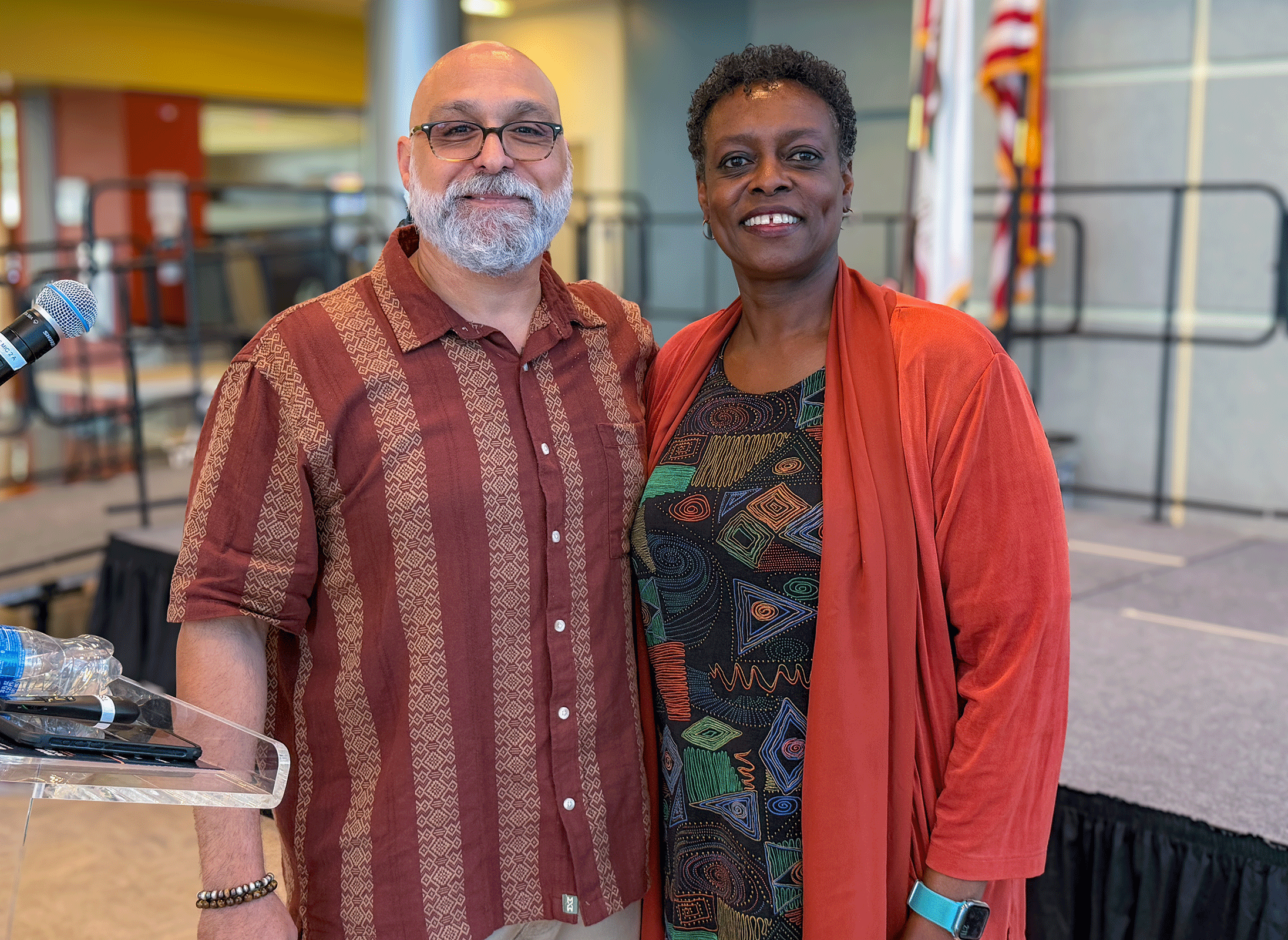
A packed audience gathered at Riverside City College for the final presentation in the Riverside Community College District’s 63rd Distinguished Faculty Lecture series, delivered by Eddie Perez, Ed.D. The lecture tour, which also included stops at Moreno Valley College and Norco College, explored “From Strain to Strength: Rethinking Masculinity and Emotional Expression,” focusing on how rigid gender norms contribute to social issues including mental health crises, substance abuse, violence, and homelessness. Perez, a sociology professor at Riverside City College since 2006, combined personal stories and scholarly research to challenge traditional notions of masculinity and urge greater emotional intelligence among men.
“Historically, men have been expected to show only two emotions: ‘I’m fine’ or ‘I’m angry,’” Perez said. “When people keep asking, ‘Are you sure you’re fine?’ it often just leads to more frustration and anger. However, society’s expectations of masculinity push this limited emotional script, and this has to change. Society needs to be more accepting of men expressing a fuller range of emotions, and men need to learn to recognize and express those emotions. This isn’t just about feelings; it’s about survival and redefining what it means to be masculine.” The lecture concluded with a call to action: “Connect: Build support networks… Share: Break the silence… Act: Incorporate these principles into daily life and relationships.” Perez’s presentation drew praise for blending academic insight with heartfelt reflection, leaving attendees with a new perspective on gender, emotion, and societal change.
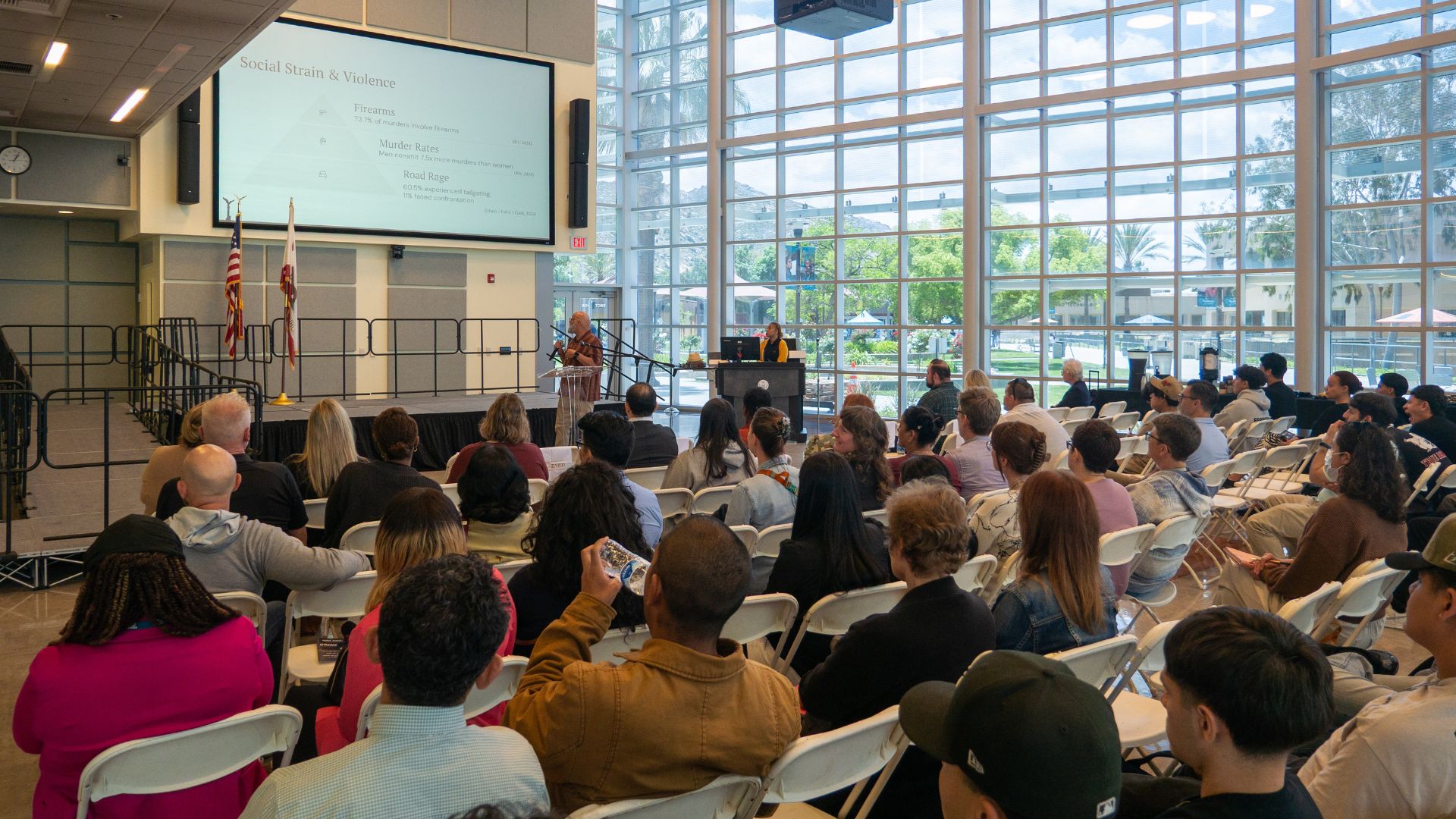
Eddie Perez presents at Moreno Valley College during the first stop on the Distinguished Faculty Lecture.
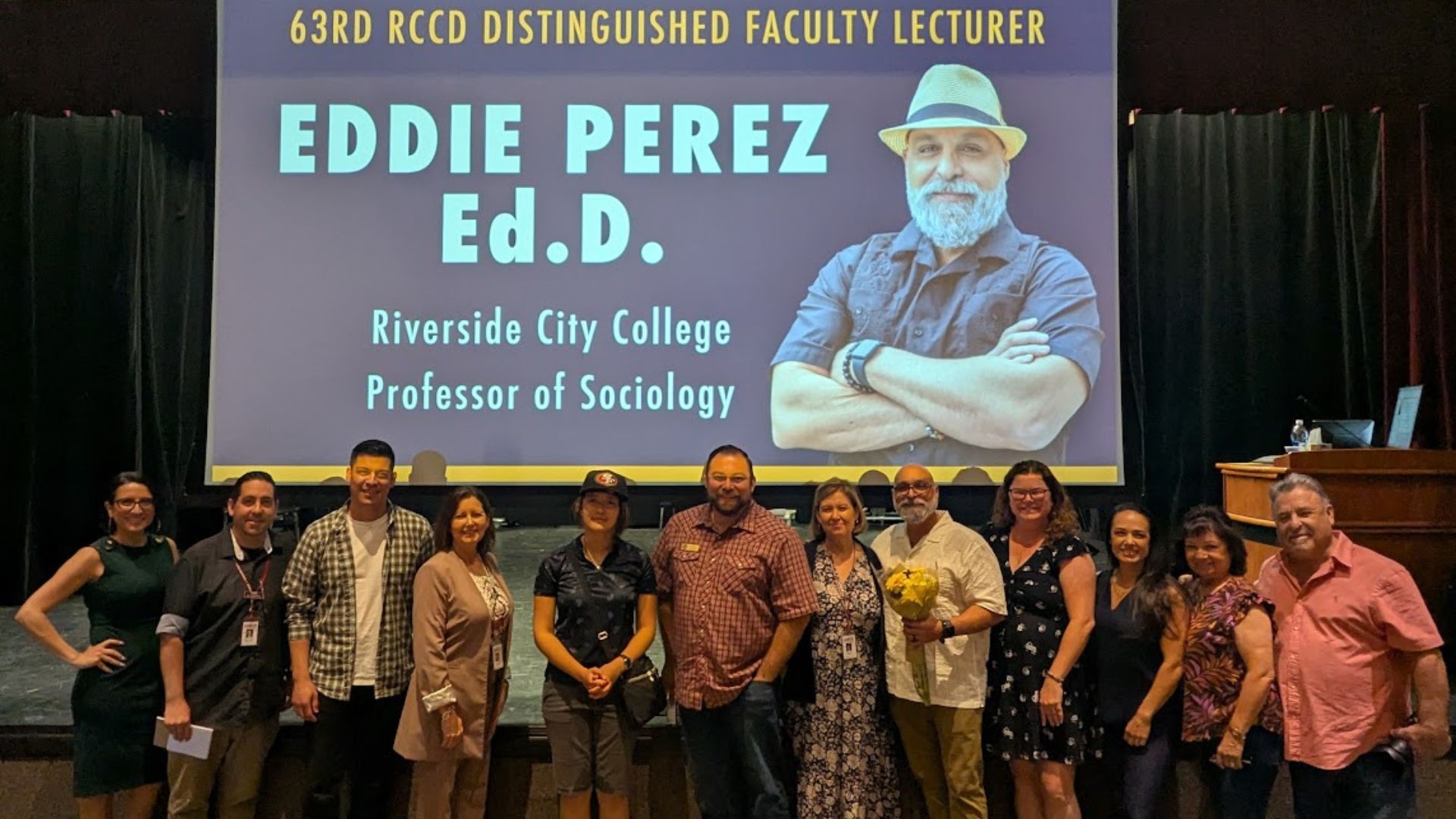
Eddie Perez joins Norco College President Monica Green and audience members following his presentation.
Perez, a professor of sociology at Riverside City College since 2006, was selected by his peers for one of the highest honors a faculty member can receive at RCCD. The initial DFL series was launched in 1961. This is an annual districtwide celebration of scholarly achievement, providing students, colleagues, and the community an opportunity to engage with groundbreaking research from RCCD’s top educators.
This year’s lecture, titled “From Strain to Strength: Rethinking Masculinity and Emotional Expression,” explored how rigid gender norms and outdated ideals of masculinity fuel urgent social issues: mental health crises, substance abuse, violence, and homelessness, particularly among men. As Perez explained:
“Historically, men have been expected to show only two emotions: ‘I’m fine’ or ‘I’m angry.’ When people keep asking, ‘Are you sure you’re fine?’ it often just leads to more frustration and anger. However, society’s expectations of masculinity push this limited emotional script, and this has to change. Society needs to be more accepting of men expressing a fuller range of emotions, and men need to learn to recognize and express those emotions. This isn’t just about feelings; it’s about survival and redefining what it means to be masculine. Men have to develop new skills: emotional skills, communication skills, and even new job skills, because the world has changed, and we have to adapt.”
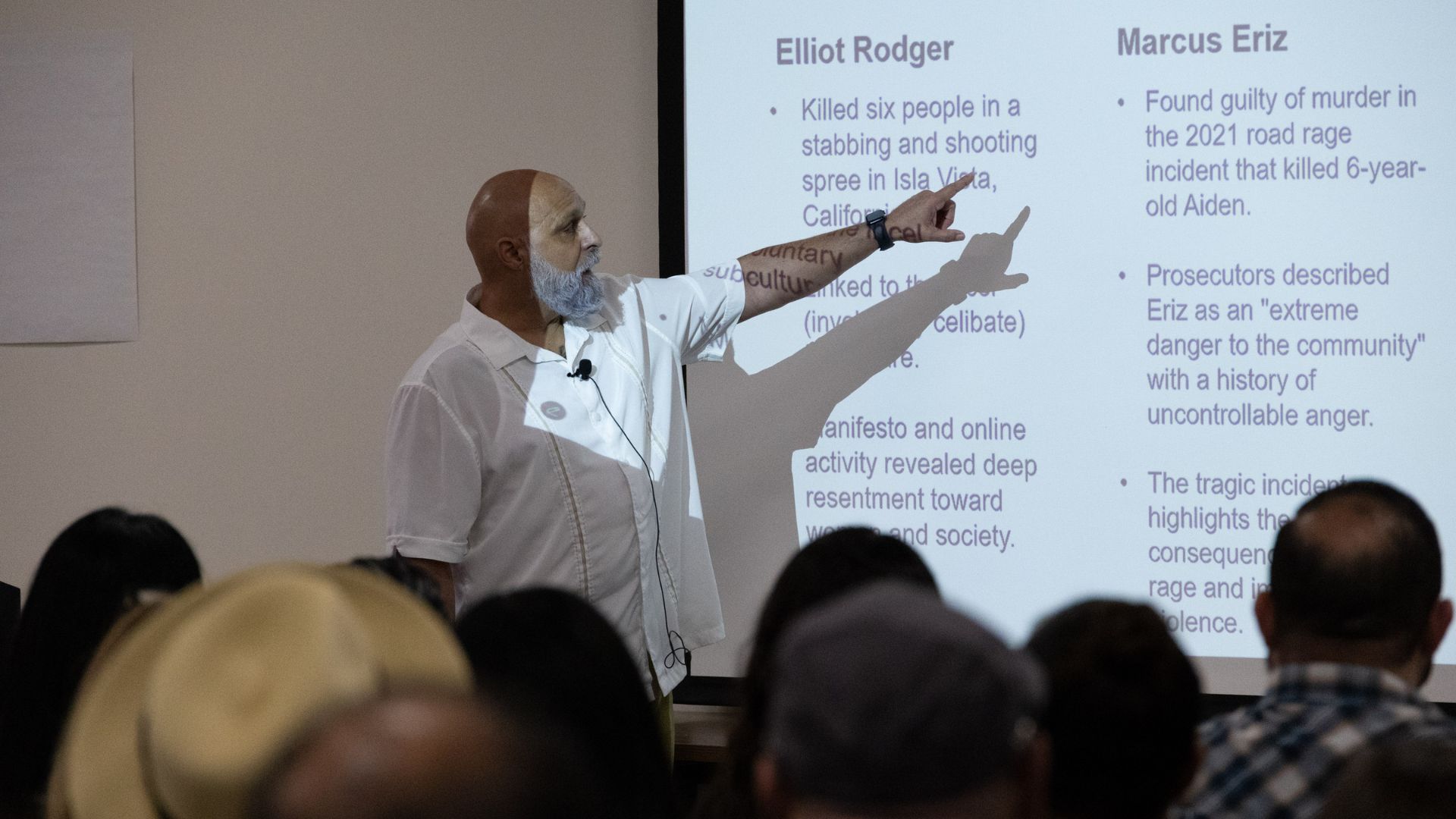
Perez began his presentation with a deeply personal reflection, recounting how his mother used to call him “Corajudo,” a Spanish term loosely meaning grumpy or short-tempered. That label followed him into adulthood and became the spark that fueled his academic interest in male emotional development.
His lecture skillfully wove personal insight with academic theory, drawing on sociological, criminological, and psychological frameworks to explain the emotional barriers men face. He highlighted Normative Male Alexithymia (the socialized difficulty men have identifying or expressing emotions) and its connection to depression, addiction, and violence.
Using Strain Theory, originally developed by Robert Merton, further explored by Robert Adnew, and later applied to gender roles by Joseph Pleck, Perez explained how societal pressures and economic changes challenge traditional male identities, especially when roles like ‘breadwinner’ become harder to fulfill.
“There’s this constant rhetoric about immigrants taking jobs,” Perez said. “But the truth is, many of the jobs men used to rely on—manufacturing, manual labor—have disappeared due to automation and globalization. We have to prepare for the future. That means men need to be in classrooms, learning the skills for today’s economy.”
The lecture highlighted the shift in the labor market: manufacturing jobs have declined by 30% since 1980, while employment in fields such as health, education, administration, and literacy (HEAL) has increased by 158%. However, men represent less than 25% of this new workforce.
Perez believed that bridging the gap starts with emotional intelligence—teaching men to recognize, express, and manage their emotions in healthy ways.
He urged attendees to:
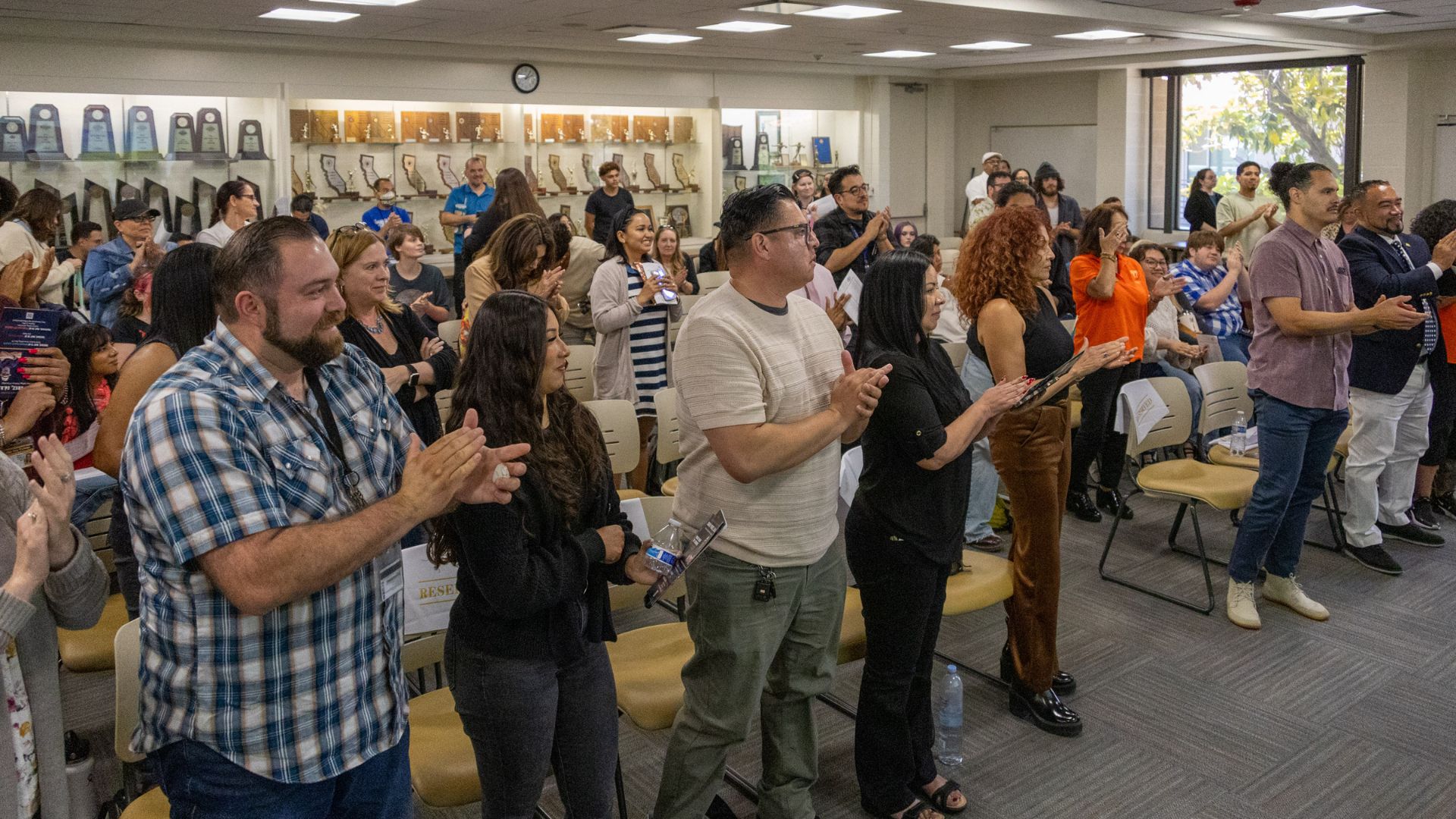
The impact of the series extended beyond the campuses. Students described Perez as a mentor and role model. Faculty praised the lecture for its timely relevance and emotional resonance.
As one audience member put it, “This wasn’t just a lecture—it was a mirror. And I saw things I needed to face that had not been dealt with.”
Eddie Perez’s contribution through the 63rd Distinguished Faculty Lecture has already sparked new conversations across the district and beyond. Through scholarship, storytelling, and sincerity, he reminded the RCCD community that rethinking masculinity isn’t about losing tradition—it’s about gaining wholeness.
 |
 |